Anti-Calprotectin / MRP14 / S100A9 / Calgranulin B Monoclonal Antibody(Clone: rMAC3781)
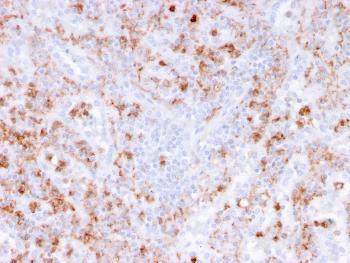
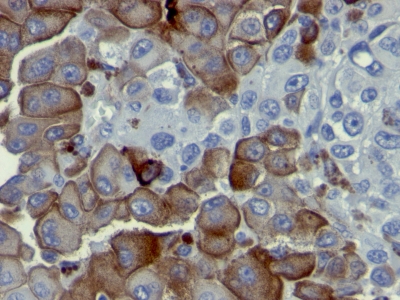
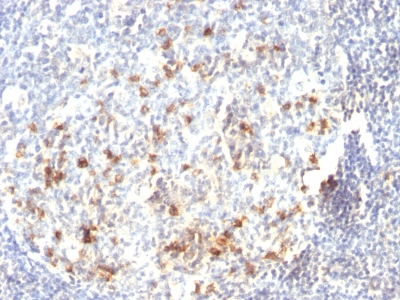
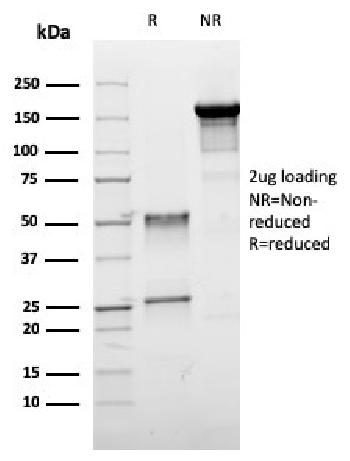
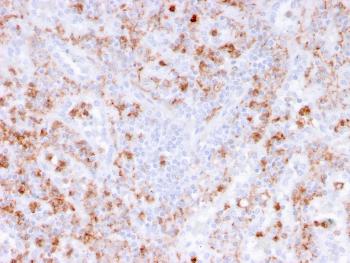
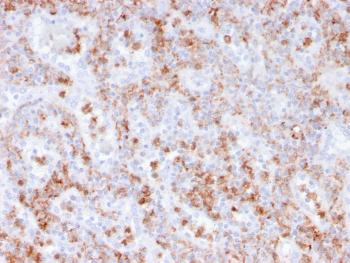
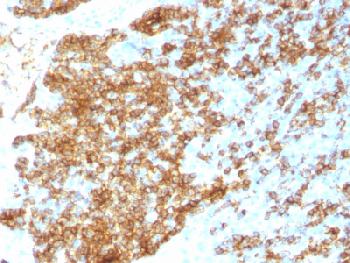
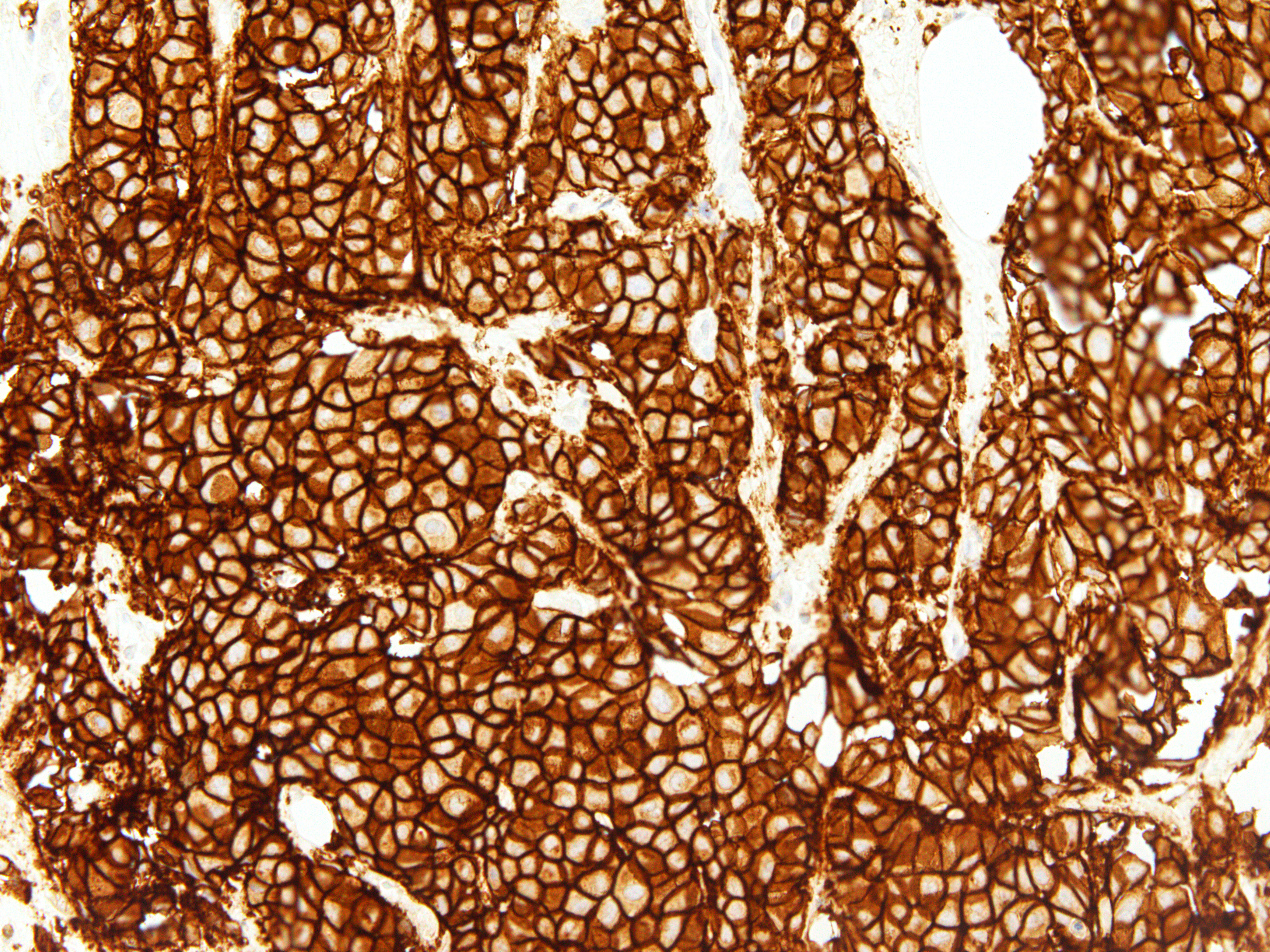
Fig. 1: Formalin-fixed, paraffin-embedded human spleen stained with S100A9 Recombinant Mouse Monoclonal Antibody (rMAC3781).
Roll over image to zoom in
Shipping Info:
For estimated delivery dates, please contact us at [email protected]
| Amount : | 100 µg |
| Isotype : | Mouse IgG1, kappa |
| Content : | 200 µg/ml of Ab Purified from Bioreactor Concentrate by Protein A/G. Prepared in 10mM PBS with 0.05% BSA & 0.05% azide. Also available WITHOUT BSA & azide at 1.0mg/ml. |
| Storage condition : | Antibody with azide - store at 2 to 8°C. Antibody without azide - store at -20 to -80°C. Antibody is stable for 24 months. Non-hazardous. |
| Gene : | S100A8 & S100A9 |
| Gene ID : | 6279; 6280 |
| Uniprot ID : | P05109; P06702 |
| Alternative Name : | 60B8AG; Calgranulin A (CAGA); Calgranulin B (CAGB); Calprotectin L1L subunit; Chemotactic cytokine CP-10; Cystic fibrosis antigen (CFAG); Leukocyte L1 complex light chain; L1Ag; Macrophage L1 protein Calprotectin; Migration inhibitory factor related protein 8; Myeloid-related protein 8 (MRP-8 or P8); Myeloid-related protein 14 (MRP-14 or P14); Neutrophil cytosolic 7kDa protein; NIF |
| Immunogen Information : | Affinity Purified monocyte membrane preparation |
Recognizes the L1 or Calprotectin molecule, an intra-cytoplasmic antigen comprising of a 12kDa alpha chain and a 14kDa beta chain expressed by granulocytes, monocytes and by tissue macrophages. Macrophages usually arise from hematopoietic stem cells in the bone marrow. Under migration into tissues, the monocytes undergo further differentiation to become multifunctional tissue macrophages. They are classified into normal and inflammatory macrophages. Normal macrophages include macrophages in connective tissue (histiocytes), liver (Kupffer s cells), lung (alveolar macrophages), lymph nodes (free and fixed macrophages), spleen (free and fixed macrophages), bone marrow (fixed macrophages), serous fluids (pleural and peritoneal macrophages), skin (histiocytes, Langerhans's cell) and in other tissues. Inflammatory macrophages are present in various exudates. Macrophages are part of the innate immune system, recognizing, engulfing and destroying many potential pathogens including bacteria, pathogenic protozoa, fungi and helminthes. This MAb reacts with neutrophils, monocytes, macrophages, and squamous mucosal epithelia and has been shown as an important marker for identifying macrophages in tissue sections.
Immunohistochemistry (Formalin-fixed) (1-2ug/ml for 30 minutes at RT),(Staining of formalin-fixed tissues requires heating tissue sections in 10mM Tris with 1mM EDTA, pH 9.0, for 45 min at 95°C followed by cooling at RT for 20 minutes);
For Research Use Only. Not for use in diagnostic/therapeutics procedures.
|
There are currently no product reviews
|



.png "ACE2/HEK293 Stable Cell Line")