Anti-CD16 / FcgammaRIII Monoclonal Antibody (Clone:LNK16)-Biotin Conjugated
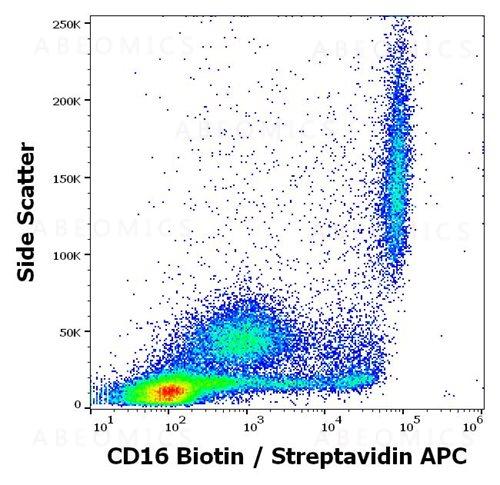
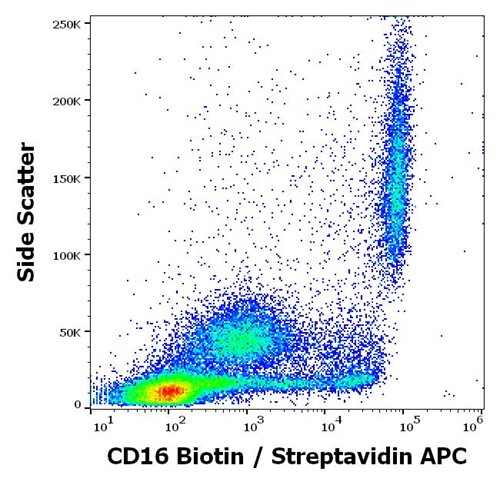
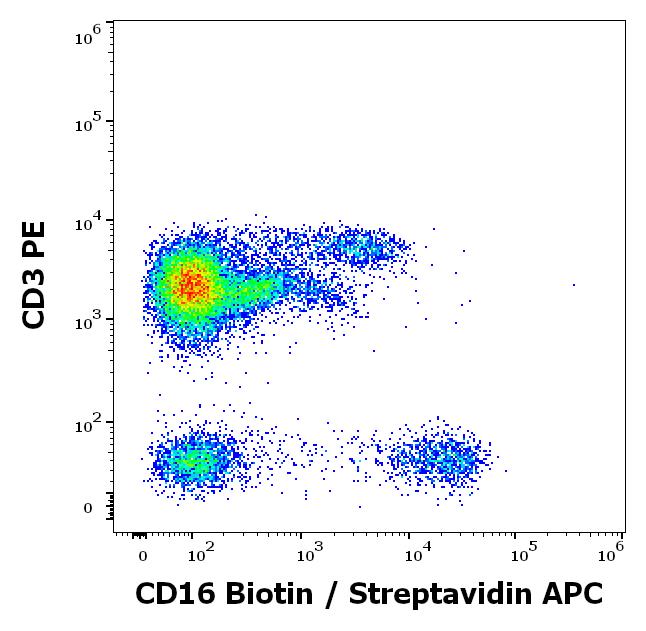
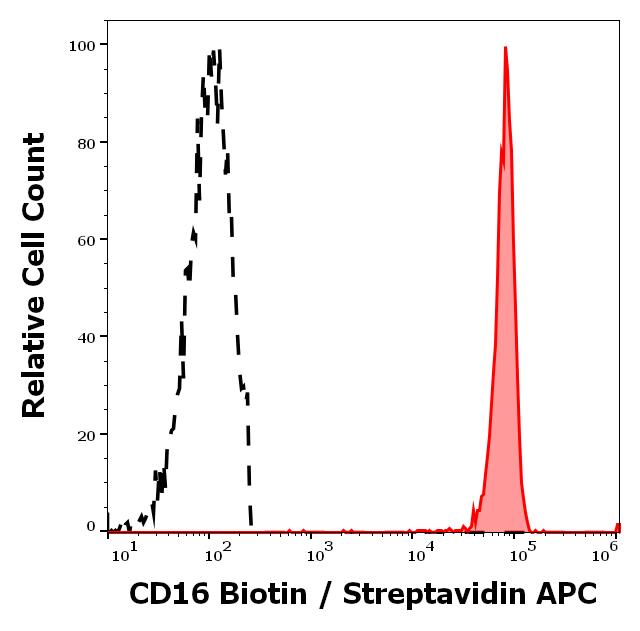
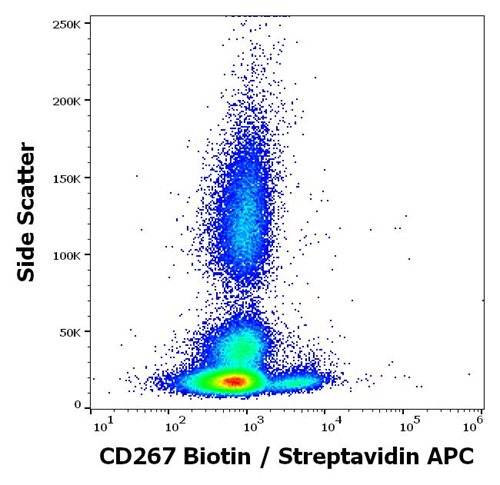
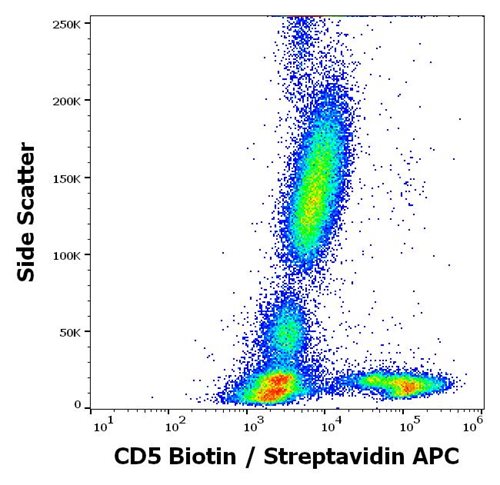
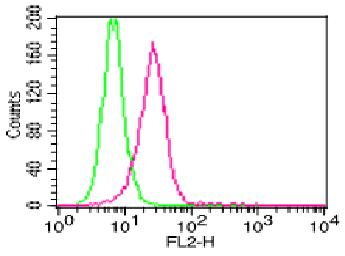
Figure 1: Flow cytometry surface staining pattern of human peripheral whole blood stained using anti-human CD16 (LNK16) Biotin antibody (concentration in sample 5 μg/ml, streptavidin APC).
Roll over image to zoom in
Shipping Info:
For estimated delivery dates, please contact us at [email protected]
| Amount : | 0.1 mg |
| Isotype : | Mouse IgG1 |
| Purification : | Purified antibody is conjugated with biotin LC-NHS ester under optimum conditions and unconjugated antibody and free biotin are removed by size-exclusion chromatography. |
| Content : | Concentration: 1 mg/ml Content: Phosphate buffered saline (PBS), pH 7.4, 15 mM sodium azide |
| Storage condition : | Store at 2-8°C. Do not freeze. |
Specificity: The antibody LNK16 reacts with an extracellular epitope of CD16, a low affinity receptor for aggregated IgG (FcgammaRIII antigen). CD16 exists in two different isoforms: CD16a (FcgammaRIIIA; 50-65 kDa; expressed on NK-cells, monocytes and macrophages) and CD16b (FcgammaRIIIB; 48 kDa; mainly expressed on neutrophils).
CD16 (FcgammaRIII) is a 50-65 kDa glycoprotein serving as a low affinity IgG receptor. Human FcgammaRIII is expressed in two forms - FcgammaRIII-A and -B. FcgammaRIII-A is a transmembrane protein of monocytes, macrophages, NK cells and a subset of T cells. It is associated with FcepsilonRI-gamma subunit and is responsible for antibody-dependent NK cell cytotoxicity. Mast cell FcgammaRIII-A is associated, moreover, with FcepsilonRI-beta subunit. Besides IgG, FcgammaRIII-A can be triggered also by oligomeric IgE. FcgammaRIII-B is a GPI-linked monomeric receptor expressed on neutrophils and is involved in their activation and induction of a proadhesive phenotype.
Flow cytometry: Recommended dilution: 1-5 μg/ml.
For Research Use Only. Not for use in diagnostic/therapeutics procedures.
|
There are currently no product reviews
|



.png "ACE2/HEK293 Stable Cell Line")