Recombinant Human Clusterin Protein (sCLU, His Tag)
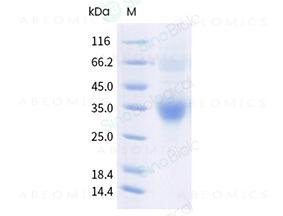
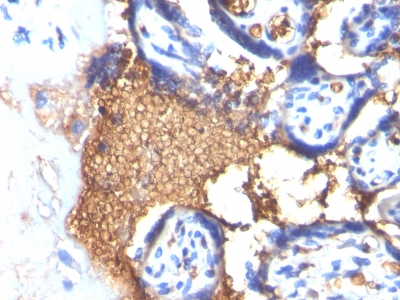
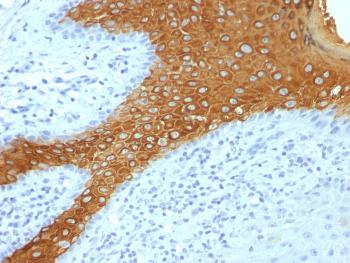
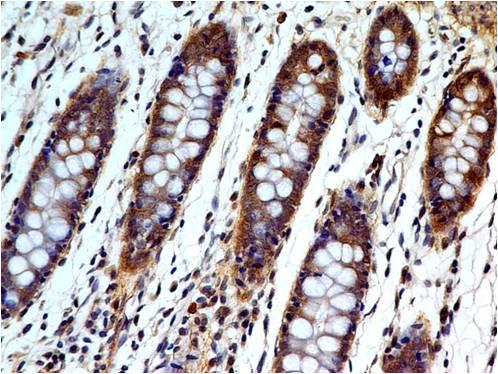
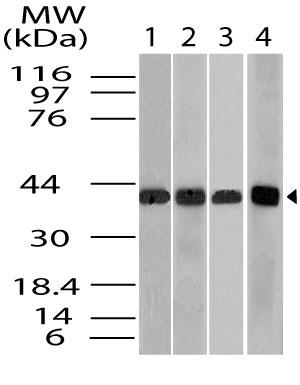
Figure 1: Recombinant Human Clusterin Protein (sCLU, His Tag): Images
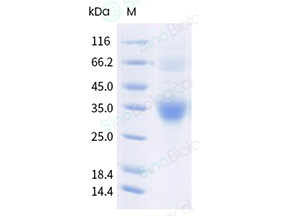
Roll over image to zoom in
Shipping Info:
For estimated delivery dates, please contact us at [email protected]
| Amount : | 100 µg |
| Purification : | ≥ 95 % as determined by SDS-PAGE. |
| Content : | Endotoxin: < 1.0 EU per μg protein as determined by the LAL method. Formulation: Lyophilized from sterile PBS, pH 7.4. Please contact us for any concerns or special requirements. Normally 5 % - 8 % trehalose, mannitol and 0.01% Tween80 are added as protectants before lyophilization. |
| Storage condition : | Samples are stable for up to twelve months from date of receipt at -20℃ to -80℃. Store it under sterile conditions at -20℃ to -80℃. It is recommended that the protein be aliquoted for optimal storage. Avoid repeated freeze-thaw cycles. |
| AA sequence : | Protein ConstructionA DNA sequence encoding the Human CLU (NP_001822.3) (Met1-Glu449) was expressed with a polyhistidine tag at the C-terminus. Predicted N TerminalAsp 23 |
| Alternative Name : | AAG4 Protein, Human; APO-J Protein, Human; APOJ Protein, Human; CLI Protein, Human; CLU1 Protein, Human; CLU2 Protein, Human; KUB1 Protein, Human; NA1/NA2 Protein, Human; SGP-2 Protein, Human; SGP2 Protein, Human; SP-40 Protein, Human; TRPM-2 Protein, Human; TRPM2 Protein, Human |
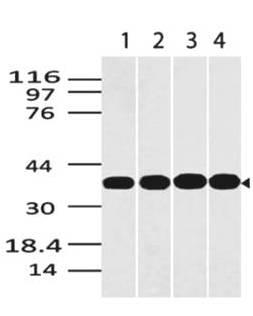
Molecular mass: The recombinant Human CLU consists of 438 amino acids and predicts a molecular mass of 51.51 kDa. It migrates as an approximately 33.5 kDa band in SDS-PAGE under reducing conditions.
Clusterin, also known as complement-associated protein SP-40, Complement cytolysis inhibitor, Apolipoprotein J, Testosterone-repressed prostate message 2, Aging-associated gene 4 protein, CLU and APOJ, is a secreted protein which belongs to the clusterin family. Clusterin/Apolipoprotein J/Apo-J is an enigmatic glycoprotein with a nearly ubiquitous tissue distribution and an apparent involvement in biological processes ranging from mammary gland involution to neurodegeneration in Alzheimer's disease. Its major form, a heterodimer, is secreted and present in physiological fluids, but truncated forms targeted to the nucleus have also been identified. Clusterin/Apolipoprotein J/Apo-J is a widely distributed glycoprotein with a wide range of biologic properties. A prominent and defining feature of clusterin is its marked induction in such disease states as glomerulonephritis, cystic renal disease, renal tubular injury, neurodegenerative conditions, atherosclerosis, and myocardial infarction. Upregulation of clusterin mRNA and protein levels detected in diverse disease states and in in vitro systems have led to suggestions that it functions in membrane lipid recycling, in apoptotic cell death, and as a stress-induced secreted chaperone protein, amongst others.
|
There are currently no product reviews
|





.png "ACE2/HEK293 Stable Cell Line")